
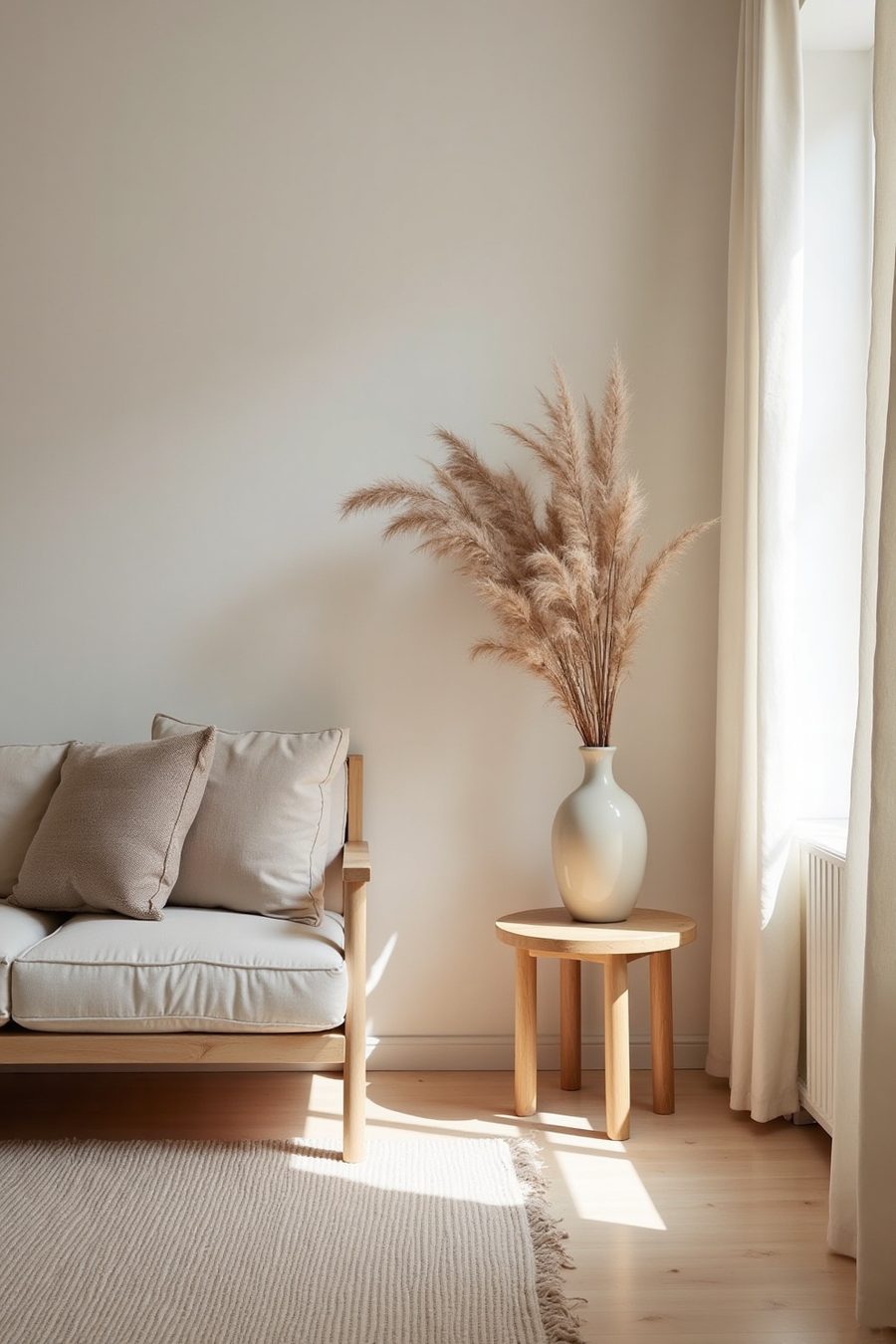
23 Japandi Living Room Ideas That Feel Calm and Effortlessly Beautiful
There's a particular kind of stillness that lives in a well-designed Japandi room. It's the quiet of a linen curtain moving in late afternoon light, the soft thud of a ceramic vessel placed on pale oak, the way negative space somehow feels generous rather than empty. Japandi isn't a trend so much as a way of editing — a slow, considered approach to building rooms that feel as good as they look.
If you've been drawn to this aesthetic but unsure where to begin, this guide gathers 23 ideas that consistently deliver that signature calm. Some are about furniture, some about light, some about restraint. Together, they form a vocabulary you can borrow from freely to shape a living room that feels timeless, tactile and entirely your own.
What Makes a Living Room Feel Truly Japandi

Japandi is the meeting point of two design philosophies that share more than they differ. From Japan comes wabi-sabi: the reverence for imperfection, asymmetry and the patina of age. From Scandinavia comes hygge and functional warmth — the soft woods, the gentle palettes, the belief that a home should hold you. Where they overlap, you find restraint, craftsmanship and a deep respect for natural materials.
A truly Japandi living room isn't defined by buying the "right" objects. It's defined by what you leave out. The palette stays tonal and earthy. Surfaces lean matte rather than glossy. Wood, linen, stone, paper and clay do the heavy lifting. And every piece earns its place — either through function, beauty or quiet meaning. Hold that filter up to every decision, and the rest tends to fall into line.
Anchor the Room With a Low, Linen-Wrapped Sofa

A Japandi living room almost always begins with a low, grounded sofa. Look for seats with a height of around 38–42cm, deep cushions and a relaxed silhouette — think of brands like Maker&Son, Soho Home's Lounge collection or the IKEA Söderhamn for a budget-friendly version (around £700) that genuinely captures the look. The lower profile invites you to settle in and visually opens up the room above.
Stick to undyed linen, washed cotton or a soft bouclé in oat, mushroom, putty or warm stone. Avoid sharp tailoring and tufted detailing — slightly rumpled covers, loose cushions and visible weave are part of the charm. A linen slipcover that softens with every wash is the essence of wabi-sabi: beauty that improves with use rather than fights against it.
Layer a Neutral Palette of Oat, Clay and Charcoal

The Japandi palette is tonal but never flat. Build it around three to four warm neutrals — oat, clay, mushroom, charcoal — with the occasional whisper of black. Farrow & Ball's Shadow White, Setting Plaster and Pigeon, or Little Greene's Slaked Lime and Rolling Fog, are reliable starting points for walls.
The trick is variation within a narrow band. Pair a creamy oat sofa with a deeper clay cushion, a charcoal ceramic and a pale plaster wall, and the room reads as layered rather than beige. Avoid cool greys, which can flatten the warmth; Japandi runs warm, always.
Introduce a Light Oak or Ash Coffee Table

A pale wood coffee table grounds the seating area without adding visual weight. Look for solid oak, ash or sycamore with a matte oil finish — gloss lacquer reads too contemporary. Round and oval shapes feel softer and echo the wabi-sabi appreciation for organic form; a 90cm round oak table sits beautifully in front of a three-seat sofa.
Ferm Living, Cane-line and Made.com (now part of Next) all offer good options between £200 and £600. If budget allows, a hand-turned piece from a small maker on Etsy or a vintage Danish find adds the irreplaceable character of something made by hand.
Add a Single Sculptural Floor Lamp

Lighting in Japandi rooms is layered and low. A single sculptural floor lamp — rice paper, rattan or matte black steel — does more work than three ceiling spots ever will. The HAY Pao floor lamp (£289) and Muuto's E27 pendant on a stand are modern classics, while the AJ floor lamp by Louis Poulsen offers the architectural black-and-curve contrast that defines the style.
Position it just behind or beside the sofa, where its glow can spill across the seat and floor. Use a 2700K warm white bulb, ideally dimmable. Cold light has no place here.
Use a Wabi-Sabi Vessel as a Quiet Focal Point

A single handmade ceramic vessel can carry an entire room. Look for raku, stoneware or unglazed terracotta with uneven rims, ash glazes or visible thumb marks. These imperfections — the slight wobble, the asymmetry, the dark patches where the fire kissed the clay — are precisely the point.
Place it on the coffee table, on a low shelf or directly on the floor. A 40–50cm vessel makes a confident statement; anything smaller can feel decorative rather than intentional. Small UK potters on Instagram and shops like Native & Co, OEN Shop and Goldfinger Studios are wonderful sources.
Embrace Negative Space Around Furniture

In Japanese design, ma is the concept of meaningful empty space. It's the breath between objects, the pause that gives everything else weight. Resist the urge to fill every corner. Leave a stretch of floor bare. Let a wall sit empty above a low bench. Allow a coffee table to hold one ceramic and nothing else.
A good rule: when the room feels nearly complete, remove one or two more pieces. Almost always, the room improves. Negative space is what separates a Japandi room from a merely neutral one.
Layer Natural Fibre Rugs for Texture

Floors are an opportunity for tactile depth. A large jute, sisal or wool rug — at least 200 x 300cm so the front legs of your sofa sit on it — anchors the seating zone. Armadillo, Weaver Green and Nordic Knots all make beautiful options, but a simple flatweave jute from La Redoute or Cox & Cox (around £150–£250) works just as well.
For extra softness, layer a smaller wool or sheepskin throw over one corner. Tatami-inspired weaves and braided seagrass add an unmistakably Japanese note. Keep colours within the oat-to-charcoal band so the layering reads as texture, not pattern.
Style a Low Shelf With Considered Objects

A low oak or walnut shelf — around 30–40cm high — invites a different kind of styling than a tall bookcase. Think of it as a horizontal moodboard. Group three to five objects with breathing room: a stack of monochrome art books, a smooth river stone, a small ceramic, a folded length of linen.
Vary heights, but keep tones aligned. Odd numbers feel more natural than even. And leave at least a third of the surface empty — restraint is what makes the styling feel curated rather than cluttered.
Bring in a Single Branch Instead of a Bouquet

Ikebana, the Japanese art of flower arranging, prizes line and negative space over abundance. A single tall branch — cherry blossom in spring, eucalyptus in summer, twisted hazel in winter — in a heavy-bottomed ceramic vessel says more than any bouquet.
Choose branches with character: a curve, an asymmetry, a few remaining leaves. The arrangement should look as if it grew that way. Replace seasonally to keep the room feeling alive without ever feeling busy.
Soften Windows With Linen or Washi Panels

Hard window treatments don't belong here. Floor-length unlined linen curtains in oatmeal or stone, hung from a slim black iron rod, allow light to diffuse softly through the day. For something more architectural, washi paper panels or sliding shoji-style screens reference Japanese interiors directly.
H&M Home and IKEA both do excellent linen curtains under £80 a panel; for a higher-end option, Volga Linen and Linen Me are worth the investment. Always hang slightly puddled on the floor — it adds softness and a sense of generosity.
Choose a Tonal Art Piece in Sumi-e Style

Art in a Japandi room should breathe. Sumi-e ink wash paintings, abstract works in charcoal and chalk, or simple landscape photography in muted tones all work beautifully. Avoid bold colour and busy composition — the art should feel like a quiet pause on the wall.
A single large piece (say 70 x 100cm) above the sofa is more powerful than a gallery wall. Frame in pale oak or thin black for the signature contrast. Desenio, Absolut Art and Etsy print shops all offer affordable options under £100.
Mix Black Accents With Pale Woods

The defining contrast of Japandi is the meeting of pale, honeyed wood with deep, matte black. A black iron lamp base, a charcoal cushion, a sumi-e print, the dark legs of a stool — these punctuation marks give the soft palette its backbone.
Use black sparingly: roughly 10–15% of the room's visual weight. Too much and the calm tips into severity. Distribute it across at least three points in the room so the eye moves naturally between them.
Add a Reading Nook With a Floor Cushion

Low living is central to Japanese interior tradition. A generous floor cushion — 70 x 70cm in linen or boucle — beside a low side table and a paper lantern creates a complete reading corner without taking up a footprint. Hay's Palissade cushion or a simple buckwheat-filled zabuton works perfectly.
Position it near a window for natural light, or in a quiet corner with a sheepskin layered underneath for warmth. It's the kind of detail that transforms a living room from beautiful to genuinely liveable.
Choose Handcrafted Throws Over Patterned Blankets

Skip the bold throws. Reach instead for slubby washed linen, chunky bouclé, soft waffle weave or undyed wool. Tekla, Society Limonta and Piglet in Bed make exquisite versions; Toast and The White Company offer accessible alternatives.
Drape — don't fold — over one arm of the sofa. A slightly crumpled throw reads as lived-in rather than staged. Keep colours within your existing palette: oat over oat, charcoal over clay.
Display a Hinoki or Cedar Wood Stool

A small solid wood stool — hinoki, cedar, oak — is one of the most versatile pieces you can own. Use it as a side table, an extra seat, a plant stand or simply as sculpture. Pieces by Ariake, Karimoku Case Study or the more accessible Muji solid oak stool (around £150) are beautifully made.
The grain, joinery and slight unevenness become part of the room's character. Over time, the wood develops a patina that only deepens its appeal.
Hide Clutter With Closed Storage in Natural Wood

Visual calm requires hidden chaos. Closed sideboards, low cabinets and lidded baskets keep the surfaces clear without minimising your actual life. Look for solid oak or ash credenzas with simple sliding doors and no visible hardware — String, Ferm Living and Vitsoe all do beautiful versions.
A 160cm low cabinet against one wall absorbs everything from books to throws to remote controls. Top it with a lamp, a ceramic and nothing else. The contrast between full storage and empty surface is the whole point.
Warm the Space With Paper Lantern Lighting

Few objects say Japandi like a paper lantern. The Noguchi Akari series remains the gold standard (from around £130), but Hay's Common pendant and a handful of independent makers offer similar warmth. Hang one low over a side table, or floor-stand one beside the sofa.
The glow through rice paper is unlike any other light source — soft, golden and almost forgiving. Dim it in the evening and the room becomes immedi
Comments