
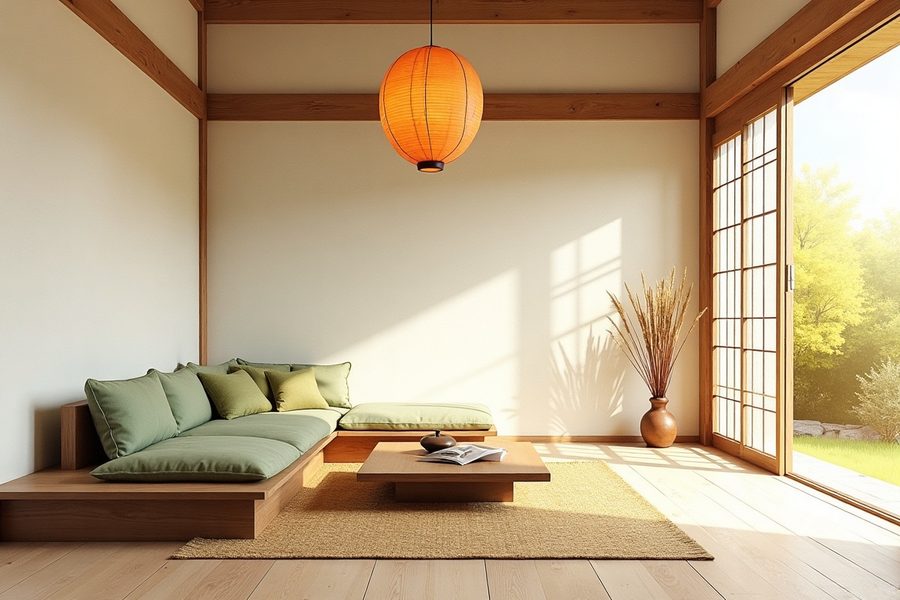
You walk into a Japandi living room. The first thing you notice is what is missing. No clutter. No loud colour. Just oak, linen, and a low table catching afternoon light.
That quiet is not accidental. It is built from a handful of decisions, repeated room-wide. This guide is the master reference for every one of those decisions.
Where Japandi Comes From: Japanese Wabi Meets Scandinavian Hygge

Japandi joins two old traditions. Japanese wabi-sabi finds beauty in imperfection and age. A cracked clay bowl is valued, not discarded.
Scandinavian hygge favours warmth and function. It prizes cosy textiles, soft light, and rooms that work hard. Both traditions distrust excess.
That shared restraint is why they fit. One brings imperfection. The other brings comfort. Together they make a room that feels calm and lived-in.
The Five Principles Every Japandi Living Room Follows

Five rules guide every later choice. First, function before decoration. Every object should earn its place by doing something.
Second, restraint. Leave gaps. Third, craft. Favour handmade pieces with visible maker's marks. Fourth, nature. Use materials that age honestly.
Fifth, imperfection. A wobble in hand-thrown clay is a feature. These five principles sit underneath layout, colour, and light. Return to them when you feel unsure.
How to Plan Your Layout Around Floor-Level Living

Japandi furniture sits low. A sofa under 80cm tall keeps the sightline open. The eye travels across the room without obstruction.
Position your lowest piece first, usually the sofa or floor cushions. Build everything else around its height. A coffee table around 30cm works well alongside it.
Keep walking paths at least 75cm wide. Nothing should force you to squeeze past. Open sightlines make a small room feel larger than its measurements.
Zoning a Living Room So It Breathes Without Walls

You can separate areas without building partitions. A flat-weave wool rug marks the seating zone. Its edges become the invisible wall.
Leave a clear gap between zones. A 40cm strip of bare floor reads as a natural boundary. The room breathes through these empty channels.
Place a reading chair just outside the main rug. Angle it slightly away. That small turn signals a separate quiet corner without any structure.
Building Your Colour Palette Step by Step

Start with a base. Choose a warm white or soft beige for walls and large surfaces. This is 70 percent of the room.
Add two supporting tones. Muted sage and warm grey work well together. Keep these to textiles, cushions, and smaller furniture.
Finish with one grounding shade. Charcoal or walnut anchors the scheme. Use it sparingly, in a single chair or frame. This grounding shade stops the room drifting pale.
The Material Mix: Wood, Stone, Clay, Paper and Fibre

A Japandi room needs contrast in texture, not colour. Pair smooth oak with rough stone. Set matte clay against soft linen.
Aim for at least four natural materials in one room. Wood, fibre, clay, and paper is a reliable set. Paper appears in lampshades or a folding screen.
Balance the proportions. One material should lead, usually wood. The others support in smaller doses. Too much stone feels cold. Too much fibre feels flimsy.
Layering Light From Floor to Ceiling

Never rely on one ceiling light. Japandi lighting works across three heights. Floor, table, and ceiling each get their own source.
Place a paper floor lamp low in a corner. Add a table lamp at around 45cm. Keep the ceiling light dim or absent during evenings.
Target a warm colour temperature. Aim for 2700 kelvin bulbs throughout. Cool white breaks the mood instantly. Warmth ties the three levels together.
Seasonal Shifts: How a Japandi Room Changes Through the Year

A Japandi room is not fixed. It shifts with the seasons. This keeps it intentional rather than static.
In winter, swap to heavier wool throws and warmer beige. In summer, switch to light linen covers and pale tones. The base stays. The dressing changes.
Branches mark the season too. Bare twigs in winter. Green stems in spring. A single seasonal branch in a clay vase says enough.
Sourcing: Where to Find Pieces Without Overbuying

Buy slowly. A Japandi room is built over months, not a weekend. Each piece should fill a real gap.
Mix handmade and flat-pack. A £200 hand-thrown vase can sit beside an oak-veneer shelf. The contrast feels honest. Slow buying prevents filler purchases.
Before any purchase, ask one question. Does this do a job? If the answer is no, leave it. Empty space is cheaper and often better.
Common Mistakes That Make a Room Look Almost-Japandi
Some rooms get close, then miss. The most common error is too matchy. Everything in one oak tone looks like a showroom, not a home.
The second error is too minimal. A room stripped bare feels cold, not calm. Add one soft textile to fix it.
The third error is too grey. Cool grey drains the warmth out. Shift towards warm beige instead. These three fixes solve most almost-Japandi rooms.
A Simple Order of Work for Your First Japandi Room

Work in stages. Do not buy everything at once. Start with the largest pieces and the palette.
First, settle walls and floor colour. Second, place the sofa and main rug. Third, add lighting across the three heights.
Fourth, layer textiles and one or two clay objects. Fifth, edit. Remove anything that does not earn its place. This order of work keeps the process calm.
Comments