
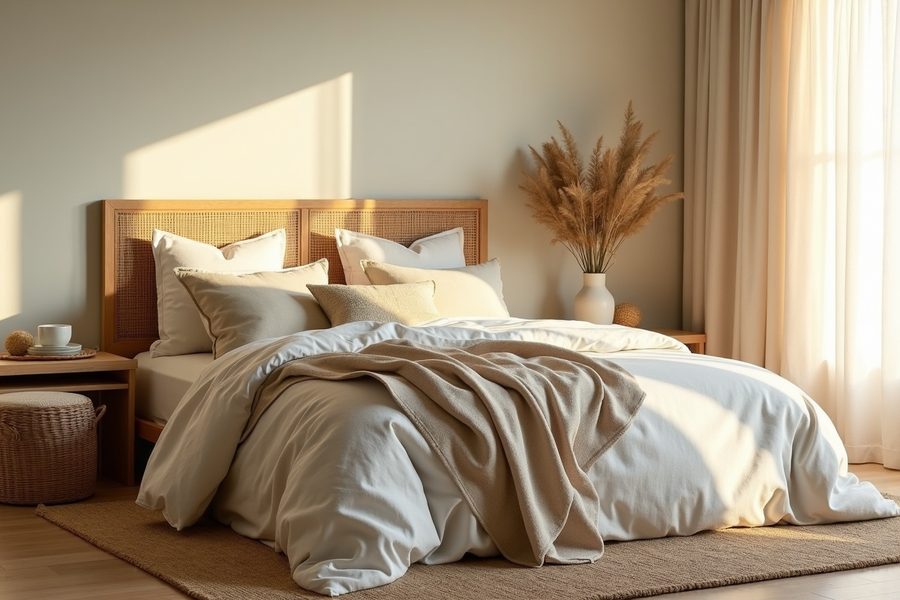
Imagine waking up wrapped in cool linen, the fabric slightly crinkled against your skin. The room around you feels warm, unhurried, and layered — like a beach house on the last day of summer.
That feeling comes almost entirely from texture, not colour. A cosy coastal bedroom built on boucle, waffle-knit, and heavyweight linen does not need a colour palette to feel complete. It needs depth, softness, and the right weight of fabric against skin.
Cozy Coastal Bedroom Bedding Layers That Build Real Warmth
Layering bedding is not about adding more. It is about choosing textiles that sit differently against each other. The contrast between rough and smooth, flat and looped, is what makes a bed feel genuinely inviting and lived-in.
Start at the base. Work upward. Give each layer a clear role in the overall tactile story.
Heavyweight Linen Duvet Over a Crisp Cotton Base Sheet

A heavyweight linen duvet — around 300 gsm — sits on top of a smooth percale cotton base sheet. The contrast between the two is the whole point. Percale cotton has a tight, flat weave. Linen crinkles naturally and softens over time.
Together they create a layered sleep surface that feels coastal without any decoration. Expect to spend around $120–$280 for a quality linen duvet cover.
Boucle Euro Shams Stacked in Front of Linen Sleeping Pillows

Place two boucle euro shams (65 cm × 65 cm) at the front of your pillow stack. Behind them, sit your standard linen sleeping pillows in a quieter, flatter weave. The boucle loops catch the light. The linen disappears softly behind them.
This creates a front-to-back depth that a single pillow type cannot achieve. Boucle euro shams typically cost $45–$95 each.
Waffle-Knit Coverlet Folded at the Foot for Casual Texture

A waffle-knit coverlet folded loosely at the foot of the bed adds visual grip at eye level. The waffle grid holds shadows between each raised square. It looks effortlessly casual, not overdressed.
Fold it once across the width so the texture faces outward. Natural cotton waffle-knit coverlets start around $55–$130.
Oversized Linen Throw Draped Asymmetrically Across One Corner

Pull a large linen throw — at least 180 cm × 140 cm — across one lower corner of the bed only. Let it pool slightly. Asymmetric draping removes visual stiffness from the bed without effort.
This single move makes a well-made bed look relaxed and beach-house casual. Stonewashed linen throws in oat or driftwood tones run $40–$90.
Price history tracked · tap to check current price on Amazon
 ↑ Price rising
 Textured Boucle Throw Pillow Covers
↑ At peak — price may drop
Price history · 16 weeks
 ✦ Editor's pick
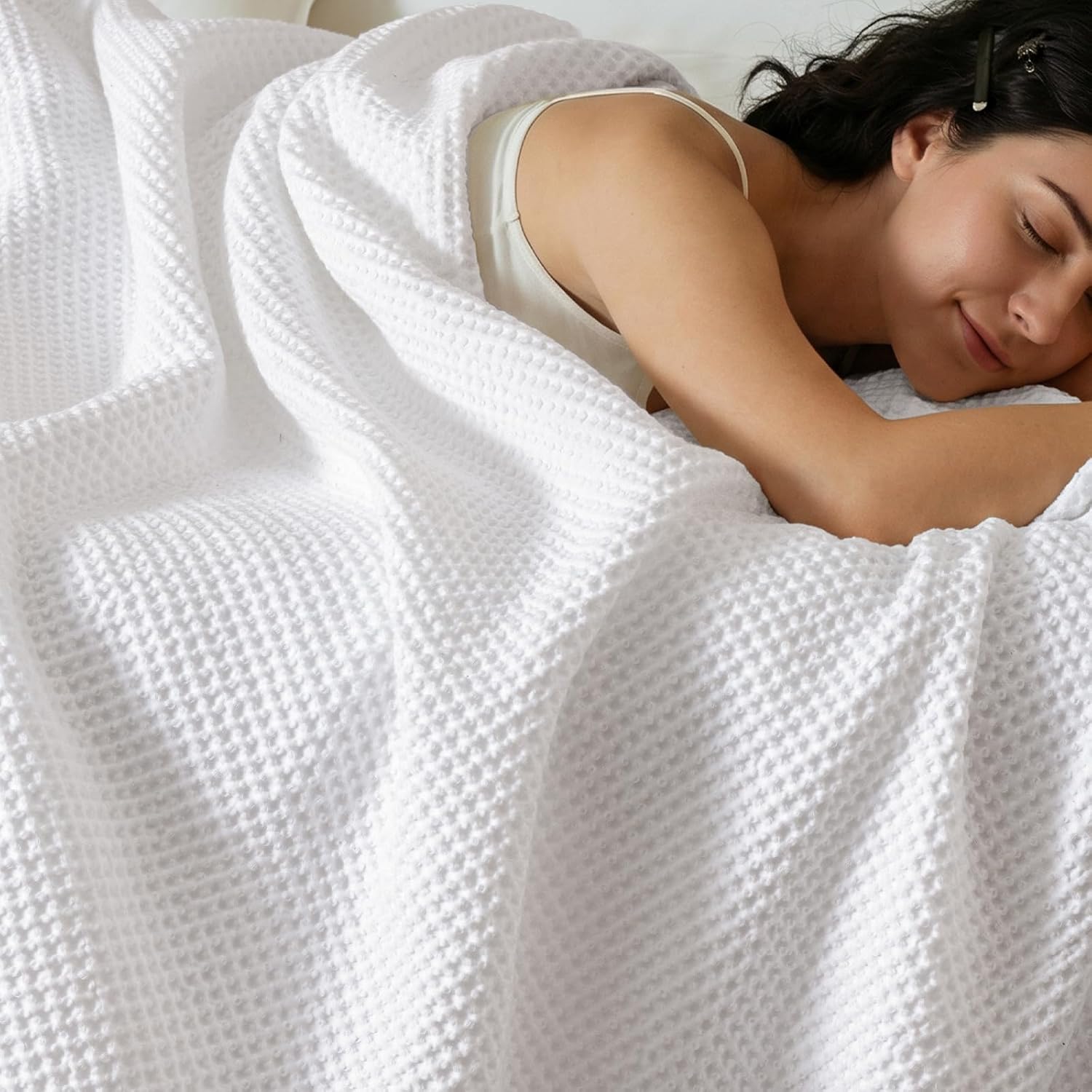
 Cotton Waffle Weave Blanket Queen Size
Price history · 16 weeks
 ✦ All-time low
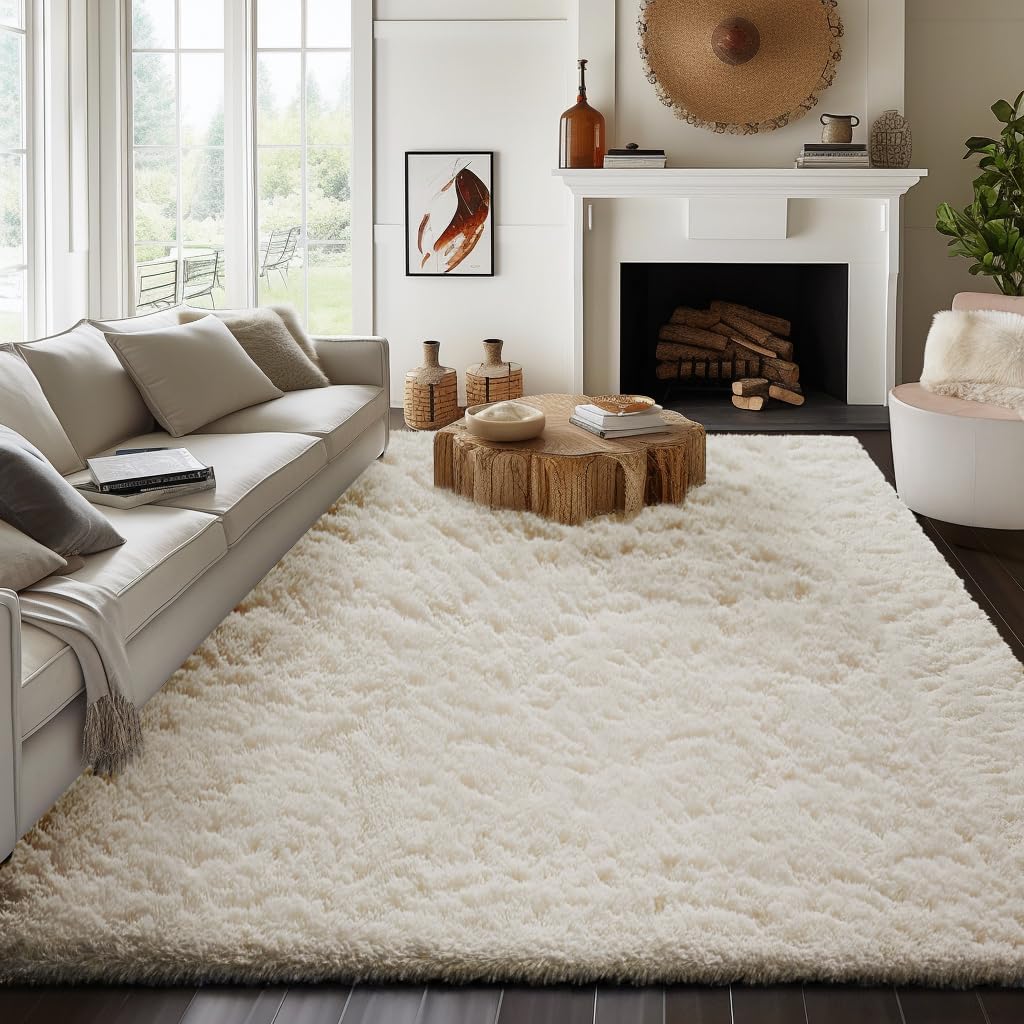
 8x10 Area Rugs for Living Room
Price history · 16 weeks
Cozy Coastal Bedroom Pillow Pairings That Add Tactile Depth
Cushions and pillows are your fastest route to layered texture. The key is pairing opposites — looped against flat, nubby against smooth. This is true regardless of colour.
Think of pillow stacking as building a surface. Each layer should feel different when touched.
Ribbed Cotton Lumbar Cushion Against a Boucle Sleeping Pillow

A ribbed cotton lumbar cushion (around 60 cm × 25 cm) placed in front of a boucle sleeping pillow creates immediate contrast. The ribs run horizontally. The boucle loops cluster randomly. They share a similar weight but a completely different hand feel.
This pairing works because neither texture overpowers the other. Ribbed cotton lumbar cushions cost roughly $30–$65.
Nubby Woven Linen Square Cushion With a Smooth Slub Insert

Use a nubby woven linen outer cover on a 50 cm × 50 cm cushion, filled with a slub-linen inner. The outer fabric catches light differently across its uneven weave. The inner slub linen is smoother but still has subtle thread variation.
Placed side by side, the two surfaces read as similar in tone but very different in texture. Nubby linen cushion covers start around $25–$55.
Chunky Hand-Knit Bolster in Natural Undyed Wool

A hand-knit wool bolster in natural, undyed fibre sits at the centre of the bed as a textural anchor. The visible stitch structure — usually a chunky rib or cable — adds warmth without weight in the eye. Undyed wool keeps its honest, organic quality.
Look for bolsters around 50 cm × 20 cm for good bed proportion. Hand-knit wool bolsters typically cost $50–$120.
Cozy Coastal Bedroom Rug Textures That Ground the Whole Room
Rugs do quiet, underfoot work. In a cosy coastal bedroom, the floor texture reinforces every choice made above it. Natural fibres — seagrass, jute, wool — keep the warmth grounded and honest.
Layer where possible. Doubling rugs of different weave depths adds dimension at floor level.
Hand-Braided Seagrass Rug With a Looped Natural Border

A hand-braided seagrass rug with a looped border gives you two textures in one piece. The braid sits tight and structured. The border loops out softly at the edge. Together they echo the contrast you have built on the bed above.
A 160 cm × 230 cm seagrass rug costs approximately $90–$200 depending on braid density.
High-Low Tufted Wool Rug in an Undyed Ivory and Oat Mix

In a high-low tufted wool rug, cut and looped pile alternate across the surface. Some areas sit raised. Others sit flush. The result is a subtly sculptural warmth underfoot that reads as textured, not patterned.
Undyed ivory and oat fibres keep the floor neutral while adding real depth. Expect to pay $150–$350 for a 160 cm × 230 cm high-low wool rug.
Layered Jute Flatweave Over a Thicker Boucle Accent Piece

Place a thin jute flatweave rug — roughly 80 cm × 120 cm — over a small boucle accent rug beside the bed. The jute sits flat and firm. The boucle underneath adds softness underfoot at exactly the point where you step out of bed.
This double-texture landing zone is a small detail that makes a real morning difference. A jute flatweave at this size costs around $35–$70.
Soft Lighting That Feels Sun-Warmed Not Bright
Lighting texture is real. Woven lamp shades, fabric diffusers, and flickering candles create warmth through material, not just wattage. The goal is dusk-like softness, not task-level brightness.
For further inspiration on how texture-forward design works across an entire room, the team at House Beautiful regularly covers the tactile side of bedroom styling in depth.
Woven Rattan Shade Table Lamp With a Warm Amber Bulb

A woven rattan lamp shade casts dappled light through its gaps, mimicking the broken light of late afternoon sun through beach grass. Pair it with a 2700K amber bulb — no higher. The result is warm and gently patterned on the surrounding wall.
Rattan lamp shades cost around $35–$80 depending on weave density and height.
Linen Drum Shade Plug-In Sconce That Washes the Wall Softly

A linen drum shade on a plug-in wall sconce diffuses light into a wide, soft wash rather than a focused beam. The linen fabric allows just enough light through to warm the wall behind it. No harsh edges.
Plug-in linen sconces with fabric shades typically cost $45–$110. They require no wiring.
Candle Cluster on a Bleached-Wood Tray for Glow Without Glare

Group three to five unscented pillar candles of varying heights on a whitewashed wood tray. The flickering light creates ambient warmth that no bulb can replicate. Vary heights between 10 cm and 25 cm for natural rhythm.
Unscented pillar candles cost as little as $5–$15 each. A bleached wood tray adds around $20–$45.
Wall Textures That Make the Room Feel Wrapped
Walls are the largest textured surface in the room. Treating them with limewash, grasscloth, or shiplap adds physical warmth and depth to the space. These are not decorative choices — they are structural texture decisions.
If you want to go deeper on how textured walls and surfaces combine with small accessories, Coastal Bedroom Decor: 18 Small Accessories That Make Every Inch Feel Beachy is a useful companion read.
Limewash Plaster Applied in Broad Irregular Strokes

Limewash plaster applied with a wide brush and irregular strokes catches light differently as the day moves. Morning light finds the raised edges. Evening light deepens the recesses. The variation is built into the application method.
A DIY limewash kit for one bedroom wall costs roughly $40–$90. Professional application runs $200–$500 per wall.
Woven Grasscloth Wallpaper on a Single Bed-Facing Wall

Apply natural grasscloth wallpaper to the single wall directly opposite the bed. The woven surface gives the eye a warm, textured focal point without paint or colour. It reads as warm even in low light.
Standard grasscloth wallpaper costs approximately $4–$12 per square foot installed. One accent wall typically requires 12–20 square feet.
Horizontal Shiplap With a Matte Limewash Finish for Depth

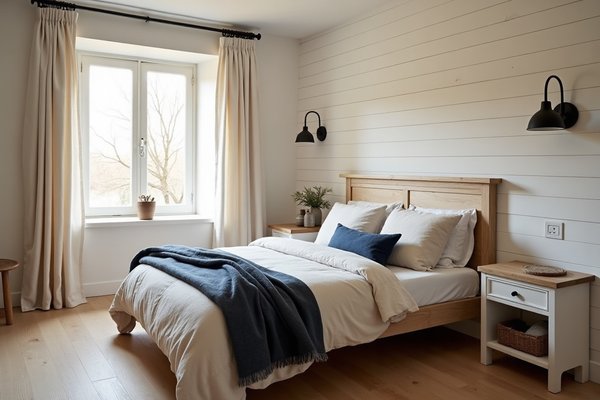
Horizontal shiplap boards treated with a matte limewash finish combine two layers of texture in one wall treatment. The shadow gap between each board adds structural line. The limewash surface adds organic variation above it.
Matte limewash absorbs light rather than reflecting it. This makes the wall feel softer and further away, which adds perceived depth to a smaller bedroom.
Frequently Asked Questions
What bedding textures work best in a coastal bedroom? Heavyweight linen, waffle-knit cotton, and boucle are the three strongest choices. Linen crinkles naturally and softens over time. Waffle-knit adds grip and shadow. Boucle loops give the bed a warm, tactile front layer. You do not need all three — start with linen and add one more.
How do I make a coastal bedroom feel warm without changing the colour scheme? Focus on fibre weight and weave depth. A chunky wool bolster, a high-low tufted rug, and a limewash wall will all add warmth through texture alone. Warm amber bulbs at 2700K also make a significant difference without touching a single wall colour.
Can I layer rugs in a small coastal bedroom? Yes. Keep the base rug low-profile — a thin jute flatweave works well. Place a smaller boucle or braided accent piece on top beside the bed. The layered zone only needs to cover the step-out area, roughly 60 cm × 90 cm, to create the effect.
Getting texture right in a coastal bedroom is slower than repainting a wall, but it lasts longer and feels more honest. Start with the bedding layers, build outward to the floor, and let the walls come last.
Comments