
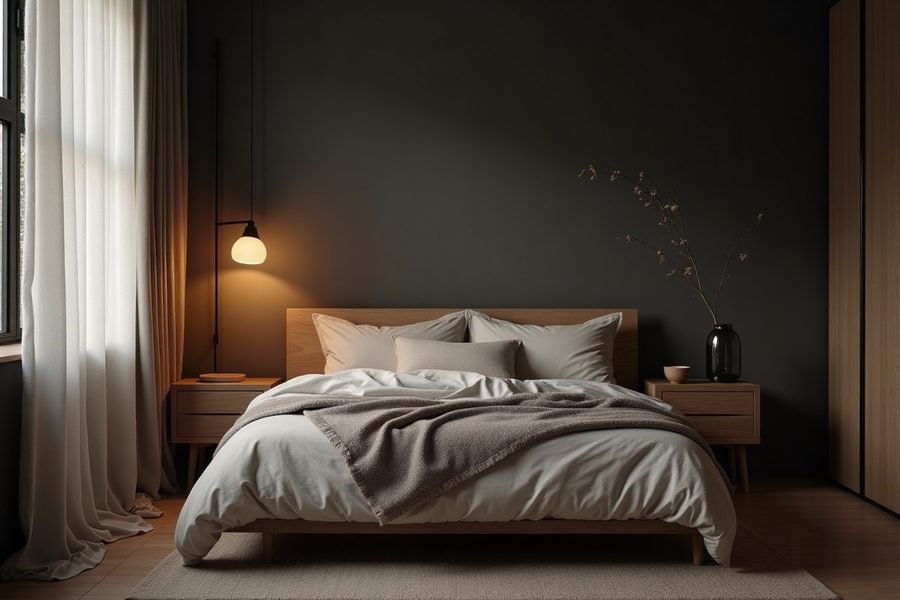
Picture a master bedroom at 7am. Light filters through a linen blind. The oak floor is bare. There is nothing on the bedside table except a clay cup of water.
That quiet is not an accident. It comes from planning. This guide walks you through building a Japandi master bedroom from an empty room. Treat it as your reference document for every decision ahead.
Where Japandi and Scandinavian Bedroom Styles Diverge

Japandi borrows from two traditions. The first is Japanese wabi-sabi, which favours imperfection and restraint. The second is Scandinavian hygge, which favours warmth and comfort. The blend lives in the overlap of both.
Scandinavian bedrooms lean brighter. They use pale woods and crisp whites. They feel airy. Japanese bedrooms feel grounded and darker, with low beds and matte surfaces.
A Japandi master bedroom sits between them. It keeps the Scandinavian warmth without the brightness. It keeps the Japanese calm without the severity. That middle ground is what you are aiming for.
The Five Design Principles Behind Every Japandi Bedroom

Five rules guide every choice. Learn them before you buy anything. Restraint comes first. Choose fewer objects of higher quality.
Balance comes second. Pair light oak with darker walnut. Pair smooth plaster with rough linen. Opposites hold the room steady.
Natural materials come third. Wood, stone, paper and textile should do the talking. Negative space comes fourth. Leave areas empty on purpose, so the eye can rest.
Function comes last. Every item should earn its place. A decorative object with no use breaks the logic. For broader context, the ultimate Japandi living room guide covers how these same principles read across the home.
Planning Your Bedroom Layout Before You Buy Anything

Measure the room first. Note the width, length and ceiling height in centimetres. Mark the windows, doors and radiators. Plan on paper before spending money.
Leave at least 70cm of walking space on each side of the bed. This keeps traffic flow easy. A master bed usually sits against the longest unbroken wall. That placement anchors the visual centre of the room.
Resist filling every corner. Empty floor space is part of the design. Aim to leave roughly a third of the floor clear. That open floor does more for calm than any object could.
Building a Japandi Material Palette That Works Together

Materials must read as one whole. Start by choosing one main wood tone. Oak or ash works well for a lighter master bedroom. Walnut suits a darker, more grounded scheme.
Add a second material for contrast. Stone, clay or plaster brings cool weight against warm wood. Then layer in soft textures. Linen and brushed cotton soften the harder surfaces.
Keep the count low. Three or four materials are enough for a whole room. More than that reads as busy. This material logic matters more than any single item you buy.
Setting the Right Light Temperature for a Calm Sleep Space

Light temperature is measured in Kelvin. For a master bedroom, stay between 2200K and 2700K. That range gives a warm, amber glow. Cooler light above 3000K feels clinical at night.
Use three layers of light. Ambient light fills the room. Task light helps you read. A low accent light gives the room depth after dark. Warm light triggers melatonin, which supports sleep, as design experts at Architectural Digest often note.
Fit dimmers wherever you can. Bright at 8pm is too much for a sleep space. Lower the level slowly as bedtime nears. Dimming control is the quiet hero of the room.
A Sensible Budget Order for Each Japandi Bedroom Element

Spend in the right order. The mattress comes first, always. Budget £600 to £1200 for one that lasts a decade. Sleep quality justifies the cost.
The bed frame is next. A solid oak or ash frame runs £400 to £900. Bedding follows, with washed linen sets from £80 to £150. These three carry the bulk of the room.
Lighting and storage come after. Decor comes dead last. Buy a single ceramic vase or a paper lamp once everything else is settled. That spending sequence stops you overspending on the wrong things.
Common Mistakes That Break the Japandi Look

Clutter creep is the first error. Surfaces fill up slowly over weeks. One book becomes five. Keep the bedside table to two items maximum.
Mismatched wood tones are the second error. Three competing browns look accidental. Stick to one or two related tones. Cold lighting is the third, undoing all your warm material work.
Too much grey is the final trap. Grey on grey feels flat and dull. Warm it with beige, clay or muted green. For inspiration that avoids these traps, see these Japandi bedroom ideas and these Japandi bedroom decor ideas.
Keeping the Room Calm Through Daily Habits

Setup is only the start. Upkeep keeps the room calm. Reset your surfaces each morning. Clear the bedside table and fold the throw. Daily resets matter more than the first install.
Swap textiles with the seasons. Lighter linen in summer, brushed cotton in winter. This small change keeps the room feeling considered. Seasonal swaps stop the space from going stale.
Maintain the empty space you fought for. New objects will always try to sneak in. Be firm about what stays. That ongoing discipline is what holds the whole look together.
A Japandi master bedroom is not finished the day you set it up. It stays calm because you tend it, one quiet habit at a time.
Comments