
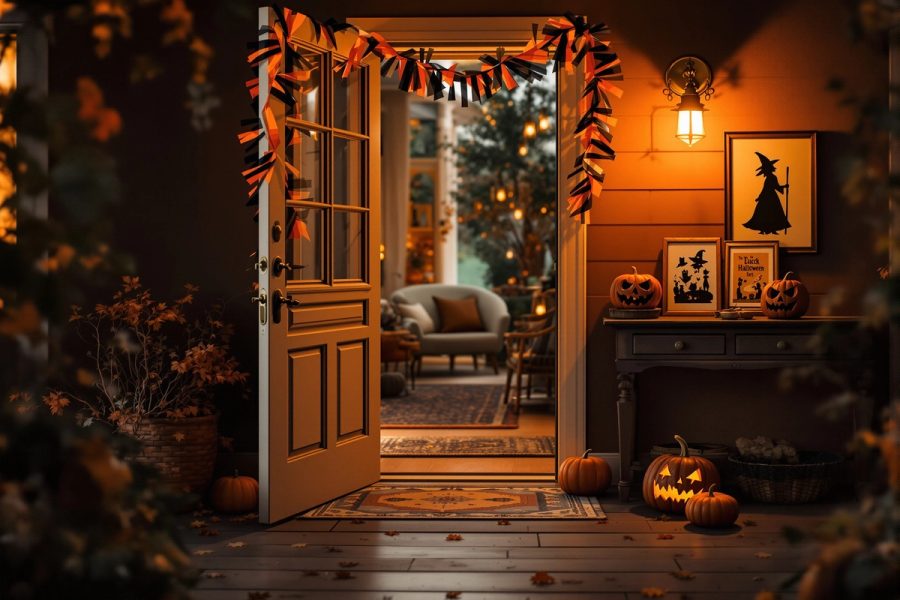
Most people love the idea of vintage Halloween decor. The warm amber glow, the black cat silhouettes, the crepe paper in deep orange and black — it all promises something richer than plastic skeletons from a big-box store. But most vintage Halloween guides throw every decade into the same pile, no logic, just "old stuff." That jumble is exactly what makes so much nostalgic halloween decor read cluttered instead of collected.
This guide fixes that. Each room gets its own specific era — 1930s crepe paper, 1950s tin kitsch, 90s lunchbox nostalgia — so your vintage halloween aesthetic feels intentional, not like a thrift-store sweep. For the complete picture, explore our full guide: Halloween Decor Ideas: 20 Spooky Stylish Designs That Elevate Every Room.
Vintage Halloween Front Porch and Front Yard: 1960s Die-Cut Silhouette Décor
Why the 1960s Own This Look

The 1960s were the golden era of Halloween die-cuts — flat cardboard witches, arching cats, and gap-toothed jack-o'-lanterns in bold black, orange, and yellow. No other decade's graphic style looks quite like it, and reproductions run $8–$25 each.
Where a Reproduction Reads Authentic vs. Craft-Store

Context does most of the work — a die-cut on a weathered wooden door reads period-correct; the same figure on smooth white UPVC reads craft fair. Look for matte, chalky-ink card stock over glossy paper, and group figures at irregular heights rather than evenly spaced.
Price history tracked · tap to check current price on Amazon
 ↑ Price rising
 Halloween Vintage Garland
↑ At peak — price may drop
Price history · 16 weeks
 ✦ All-time low
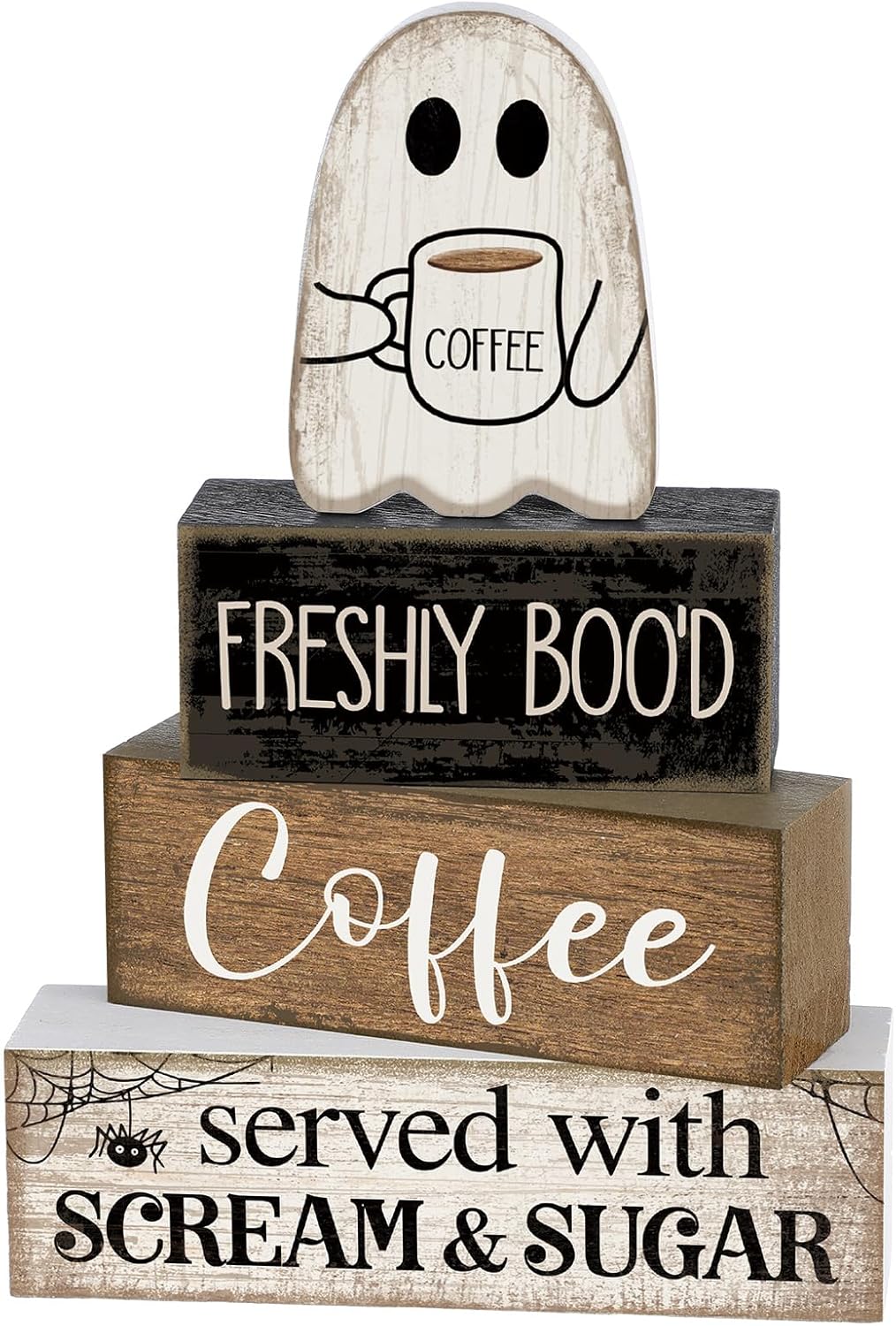
 4 Pcs Halloween Table Decor
Price history · 16 weeks
 ✦ Editor's pick
 Halloween Witch Lamp
Highest seen: $25
Price history · 16 weeks
Vintage Halloween House Exterior: Porch Light and Door Hardware That Read Aged
The Light Fixture Decision That Happens Before Any Decor

A cold white LED bulb defeats every piece of vintage decor you add — no styling survives clinical blue-white light. Cast-iron or oil-rubbed bronze fixtures ($40–$90) read aged; brushed nickel and chrome read contemporary regardless of what surrounds them. You'll find even more ideas in Dark Halloween Aesthetic: 14 Moody Elevated Designs That Are Scary Chic.
The Bulb Swap That Does More Than Any Decoration

A $6 amber Edison-style filament bulb around 2,200K does more for a vintage exterior than $80 of new decor. Pair it with a simple dried-leaf and black-ribbon wreath — the light is doing the heavy lifting.
Vintage Halloween Entryway Decor: A 1930s Postcard and Ephemera Console
Why Framed Beats Propped

The 1930s produced richly graphic Halloween paper goods — witches over cauldrons, moonlit graveyards, grinning cats. Framed postcards read like a private collection; propped, unframed ones read unfinished.
How to Group Ephemera So It Reads Collected

Use odd numbers — three or five frames, never four or six — in varied sizes for rhythm without symmetry. Leave two inches of negative space between each frame; the space between objects matters as much as the objects. Add one small amber bottle or a single dried stem, nothing more.
Vintage Halloween Living Room Decor: 1930s Crepe Paper and Tin Noisemaker Styling
The Two Elements That Define This Era

Twisted crepe paper garlands and tin noisemakers — small printed drums with wooden handles — read unmistakably 1930s: warm, handmade, quietly theatrical.
Why This Era Reads Elegant When You Stop at Two Elements

One garland across the mantel, one cluster of three noisemakers in a shallow dish — that's the complete moment. A third element tips the room from curated display into party-supply storage. Garlands run $12–$20; noisemakers $15–$45 at estate sales.
Price history tracked · tap to check current price on Amazon
 ✦ Editor's pick
 Vintage Halloween Wall Art Decor
Price history · 16 weeks
 = Price stable
 Vintage Gold Framed Wall Art
Price history · 16 weeks
 ✦ All-time low
 Unframed 12pcs Gothic Prints for Wall Decor
Price history · 16 weeks
Vintage Halloween Kitchen Decor: 1950s Tin and Ceramic Kitsch on Open Shelving
Why This Era Belongs in a Kitchen

Tin candy containers, ceramic canisters, lithographed trays — mid-century Halloween kitsch is food-adjacent in scale and material, and its orange-black-cream palette works with most existing kitchens.
Keeping Mid-Century Kitsch From Tipping Into Clutter

Limit the display to one shelf total, tin pieces grouped left, ceramic grouped right. Grouping by material rather than theme creates order even when individual pieces are mismatched. Leave a hand-width of space between the two groups.
Vintage Halloween Bedroom: Soft Nostalgic Textiles and a Single Framed Postcard
Why Less Is the Whole Idea Here

The bedroom is the one room where vintage Halloween should barely register. One vintage-print pillowcase, one small framed 1940s–50s postcard — nothing actively spooky.
Why the Bedroom Should Whisper, Not Shout
A single vintage-print pillowcase ($18–$35) reads more considered than a full Halloween-colored bedding set. Keep the rest of the bedding in plain ivory or warm gray linen so the one vintage piece stands out.
Vintage Halloween Bathroom: Amber Apothecary Bottles and a Black Cat Accent
Why Apothecary Bottles Work Without Trying

Amber glass bottles read Victorian and medicinal with zero Halloween branding required. Three bottles in graduated heights ($20–$45 for a set) work year-round and read atmospheric in October with candlelight nearby.
One Black Cat Detail Instead of a Full Theme
One black cat piece reads intentional; three read Halloween-store clearance aisle. A ceramic soap dish or a small framed print — not both — placed where the eye lands first.
Vintage Halloween Posters and Artwork: Building a Framed Ephemera Gallery Wall
The Graphic Quality That Holds Up as Art

1920s lithograph-style advertising and 1940s greeting-card illustrations carry sophisticated palettes — deep orange, mossy green, inky black — that read as real art, not seasonal decoration.
When a Reproduction Print Earns Its Place

A reproduction fails the moment it's laminated, poster-sleeved, or sitting in a frame newer and brighter than the print itself. Consistent black or walnut frames with cream matting fix this. Source from small print sellers ($15–$40 per piece) over large retailers for better paper and ink quality.
Vintage Halloween Black Cat Aesthetic: The One Motif That Works in Every Room
The Rule Is About Material, Not Style

A black cat in embroidery, woodblock print, or hand-painted ceramic reads collected. The same silhouette in shiny injection-molded plastic reads pharmacy aisle.
Art and Embroidery Over Plastic

Even well-designed plastic pieces read costume-shop the moment they sit near genuine vintage items. One embroidery hoop in the kitchen, one print in the bathroom, one ceramic cat on a bedroom shelf — the motif threads through without repeating the same object.
Vintage Halloween Aesthetic 90s Style: Lunchbox Tins and Plastic Pail Nostalgia
A Genuinely Different Kind of Vintage

Plastic pumpkin pails, lunchbox tins, VHS-era sleeve art — these are 30 years old now and legitimately vintage, but brighter, bolder, and unambiguously mass-produced. This is not 1930s restraint — it deserves its own space, not a blend with older eras.
Why 90s Nostalgia Needs Its Own Shelf

A bright plastic pail next to a 1930s crepe garland is an immediate visual clash — saturation, material, and cultural reference all mismatch. Give 90s pieces one contained shelf of their own and they read as a deliberate nostalgia moment instead of a mistake.
Vintage Halloween Embroidery and Linens: Tea Towels, Pillowcases, and Tablecloths
Where These Pieces Actually Belong

Cross-stitched tea towels, running-stitch pillowcases, stem-stitched tablecloths belong in the kitchen, dining table, and guest bath — not the living room or bedroom, where they compete for attention.
Mixing Embroidery With Modern Linens

One embroidered piece per surface, paired with a plain neutral linen, is what makes the embroidery pop instead of fight for attention. A thrifted tea towel over an oven rail costs nothing and does more than any canister set.
Vintage Halloween Decorations: Where Real Antique Pieces Actually Come From
The Sourcing Gap Most Guides Skip
Estate sales, church rummage sales, and dedicated Facebook collector groups yield genuine pre-1970 pieces at real prices. A tin noisemaker priced at $4 at an estate sale sells for $35–$65 online — the object is identical.
Three Things to Check Before You Buy
Check fading (washed-out pinkish orange signals sun damage that won't recover), structural integrity (tears, dents), and flaking paint especially on tin — a genuine lead-paint risk on pre-1970s pieces that should never sit near food, flame, or a child's space.
Vintage Halloween Decor Styling Rules: Mixing Eras Without the Costume-Shop Effect
The One-Era-Per-Surface Rule

Most vintage Halloween rooms look chaotic because they mix decades with no logic on a single surface. One display grouping — one mantel, one shelf, one console — should hold pieces from one era only.
Color Palette, Not Matching Decades, Is What Ties a Room Together

A shared palette of amber, black, and ivory is what reads intentional — not matching every room to the same decade. A bright 90s tin next to a deep-orange 1930s garland clashes; the same garland next to an amber 1950s canister and one black-framed cat print reads like a room someone thought about.
Frequently Asked Questions
What's the difference between vintage and retro Halloween decor? Vintage means original objects from a specific past decade with genuine age and texture. Retro means new items styled to look old. Both work, but they behave differently when mixed — original pieces carry surface imperfections reproductions rarely replicate at close range.
Where can I find real vintage Halloween decorations without collector prices? Estate sales are the best source for underpriced genuine pieces. Local thrift shops in older neighborhoods and dedicated Facebook collector groups also yield 1950s–70s finds regularly in October. Antique malls tend to price Halloween pieces at a premium.
Can I mix different vintage eras in the same room? Yes — apply the one-era-per-surface rule, then tie the room together with a shared color palette like amber, black, and ivory. The palette creates cohesion; the era separation prevents visual noise.
Vintage Halloween decor is not one look — it's a range of eras, each with its own objects, materials, and graphic language. Pick your starting point, stay inside one era per surface, and let the shared palette do the rest.
Comments